
High-Protein Snack Guide: Simple Ideas to Support Energy, Fullness, and Better Daily Nutrition
Snacking gets a bad reputation, but the real problem is usually not snacking itself. It is the type of snack, the timing, and whether it actually helps you feel satisfied.
A lot of people reach for snacks because they are tired, hungry, busy, or simply trying to get through the day without overeating later. The problem is that many common snack foods are built around refined carbohydrates, added sugars, and convenience rather than real satisfaction.
That often leads to quick energy, followed by a crash, more cravings, and the feeling that you are hungry again not long after eating.
That is where high-protein snacks can make a real difference.
As your guide explains, protein-rich snacks can help support steadier energy, improve fullness, support appetite control, and make balanced eating easier to maintain throughout the day.
The goal is not to snack perfectly. The goal is to make better snack choices feel simple, practical, and sustainable.
Why So Many Snacks Leave You Unsatisfied
One of the biggest frustrations with everyday snacking is that many options do not actually hold you for long.
You may have experienced this yourself:
you eat a snack, but still feel hungry soon after
you get a quick boost, then feel flat or sluggish
you snack mindlessly because the food is there
you end up grazing through the day without feeling properly satisfied
you rely on ultra-processed convenience foods because they are easy
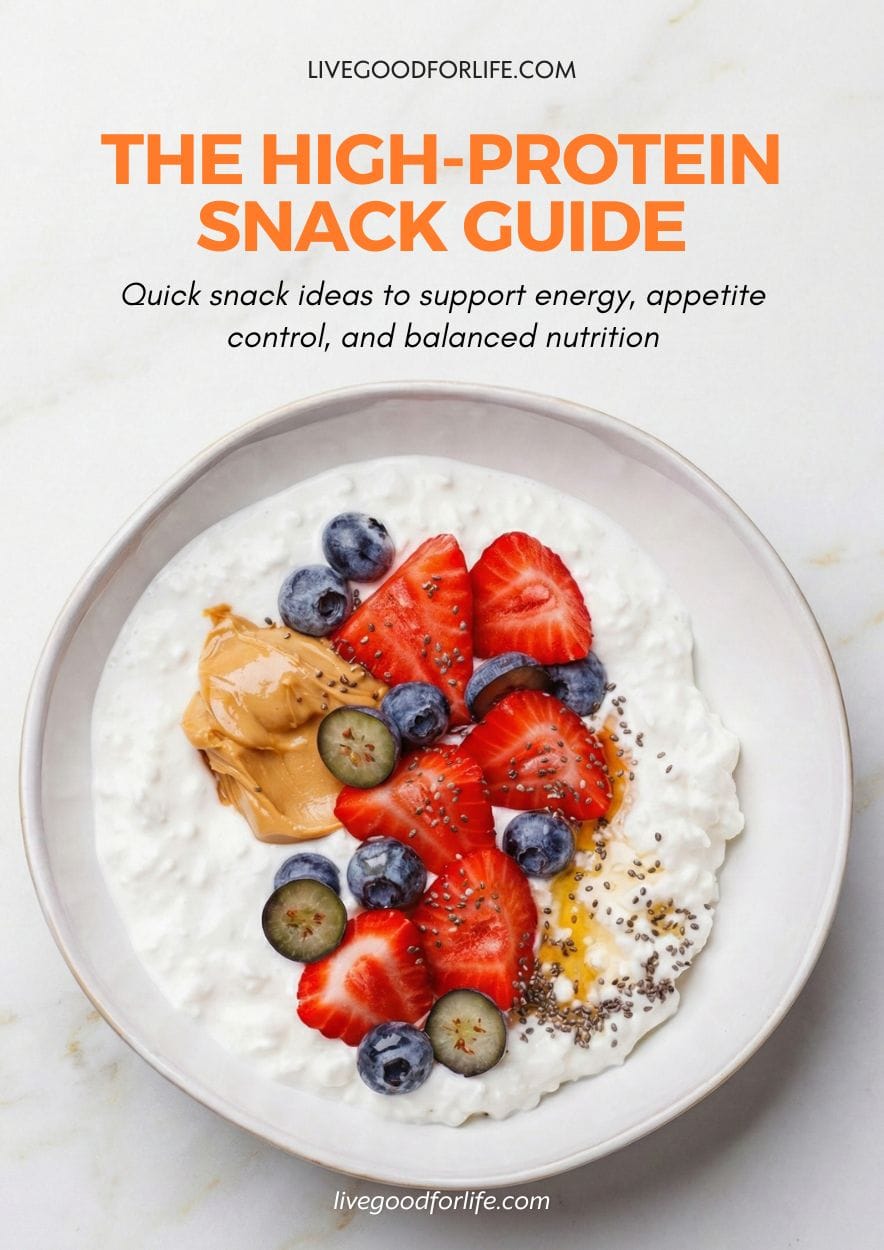
This is exactly the kind of pattern your guide helps address. It points out that protein digests more slowly than many highly processed snack foods, which can help create a greater sense of fullness and reduce the urge to keep grazing or overeat later in the day.
Common Signs Your Snacks May Need an Upgrade
A better snack routine often starts with noticing what is not working.
Some common signs include:
frequent hunger between meals
strong afternoon cravings
energy dips after sugary or refined snacks
reaching for snacks out of habit rather than real hunger
eating snacks that feel convenient but not satisfying
feeling like your meals and snacks are out of balance
Your guide also gives a gentle reminder that snacks are meant to support your meals, not replace them. When snacks become oversized, overly processed, or disconnected from real hunger, they can make daily eating feel less balanced rather than more supportive.
Why High-Protein Snacks Matter
Protein plays an important role in helping regulate hunger and support steadier energy during the day. In the guide, you explain that including protein in snacks can make it easier to stay satisfied between meals and maintain more balanced eating habits.
The benefits outlined in your guide include:
better satiety and hunger control
steadier energy support
improved appetite regulation
support for muscle maintenance
better snack quality overall
more opportunity to include nutrient-dense foods in the day
That does not mean every snack needs to be complicated or perfectly measured. In fact, one of the strongest points in the guide is that high-protein snacks work best when they are simple, balanced, and practical to prepare.
A Simple Way to Build Better Snacks
One reason people struggle with snacks is that they overthink them. They assume a “healthy snack” needs to be complicated, expensive, or time-consuming.
Your guide keeps it refreshingly practical by focusing on three simple principles:
1. Prioritize a protein source
Protein should be the foundation of the snack. This helps increase fullness, support steadier energy, and reduce the likelihood of overeating at the next meal.
2. Pair it with a supporting food
Adding fiber-rich foods such as fruit, vegetables, or whole grains can help extend fullness and create a more balanced snack. Your quick snack combinations section uses this exact structure: pick one protein source and one supporting ingredient.
3. Keep it simple and realistic
The guide emphasizes that effective snacks do not need to be complicated. Simple ingredients that are easy to prepare are often the easiest to stick with long term.
Do This, Avoid This
Sometimes it is easier to improve your snack routine by knowing what to move toward and what to move away from.
Do this:
choose snacks with a clear protein source
pair protein with fiber-rich foods when possible
keep snacks simple and easy to prepare
plan snacks ahead to avoid impulsive choices
use snacks to support energy between meals
choose mostly whole or minimally processed foods
Avoid this:
snacks built mostly around refined carbohydrates
relying too heavily on ultra-processed snack foods
constant grazing throughout the day
very large snacks that replace balanced meals
sugary snacks that lead to rapid energy crashes
eating mindlessly without real hunger
This part of the guide is especially useful because it takes the pressure off. You do not need a perfect meal plan to improve your snacking. You often just need a clearer framework.
Easy High-Protein Snack Ideas
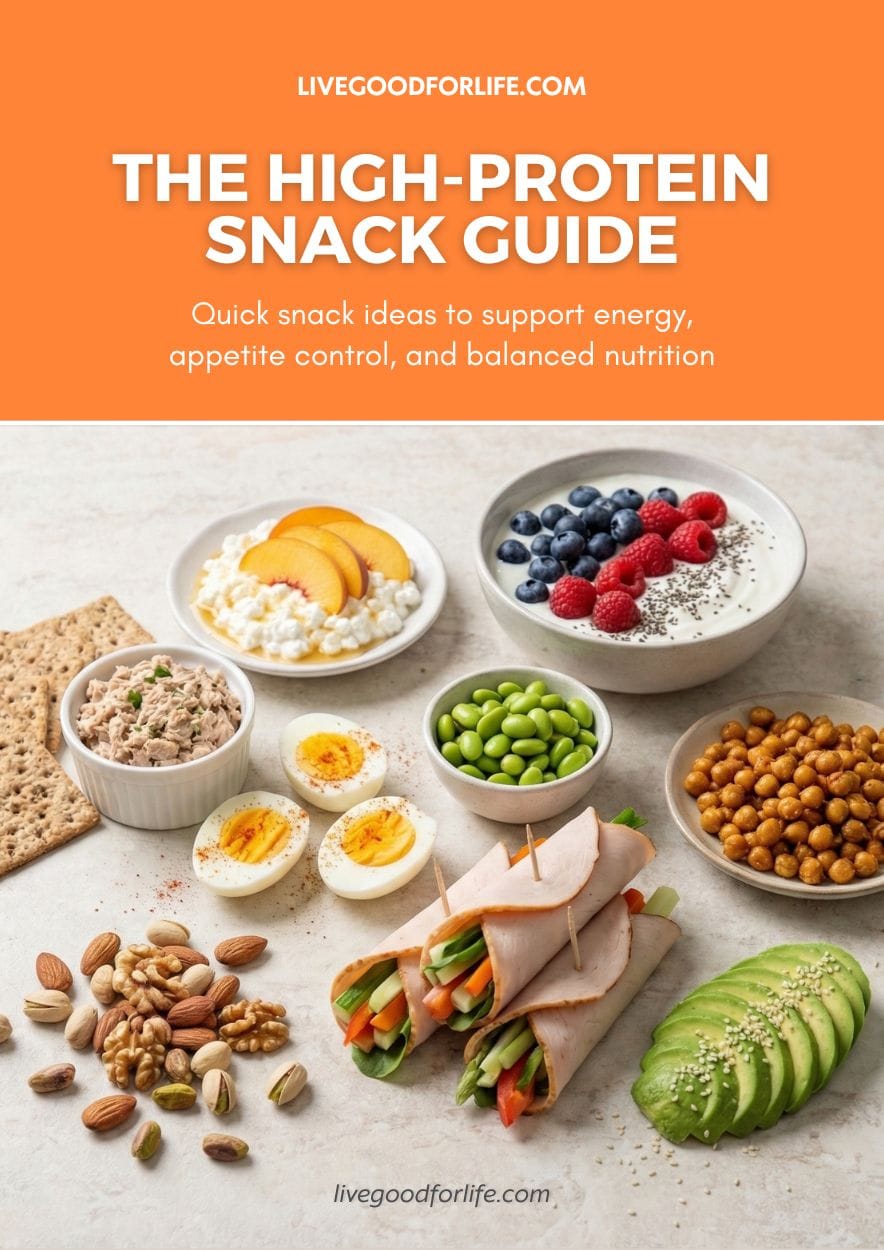
Your guide includes a strong list of quick snack ideas using simple everyday ingredients. A few examples include:
Greek yogurt and berries
cottage cheese and pineapple
hard-boiled eggs
edamame with sea salt
tuna and whole-grain crackers
turkey roll-ups
protein smoothie
protein yogurt parfait
roasted chickpeas
egg salad lettuce cups
chicken and avocado bites
What makes these ideas useful is that they are realistic. They are not fancy. They are the kind of snacks people can actually keep in rotation through a normal week.
Better Store-Bought Options for Busy Days
Not everyone has time to prep snacks from scratch every day, and your guide acknowledges that clearly. It explains that while homemade snacks are often ideal, there are still many convenient store-bought options that can support a high-protein eating pattern.
Some of the options listed include:
protein bars
beef or turkey jerky
Greek yogurt cups
cottage cheese snack cups
high-protein yogurt drinks
roasted chickpeas
edamame snack packs
tuna packets
string cheese
protein shakes
The guide also shares helpful tips for choosing better packaged snacks:
look for at least around 10 to 15 grams of protein per serving
keep added sugars low
choose simple ingredient lists
watch portion sizes
avoid heavily processed fillers
choose snacks where protein is one of the main ingredients
Planning Ahead Makes a Difference
One of the most underrated ideas in the guide is the snack planning page. It highlights how planning snacks ahead can reduce impulsive choices and help keep energy more stable throughout the week.
That matters more than people think.
When you already know what your better options are, you are less likely to grab whatever is quickest in the moment. Even preparing just two or three go-to snacks for the week can make your routine feel much easier.
Final Thoughts
High-protein snacks are not about chasing perfection or turning every bite into a nutrition project. They are simply one practical tool that can help make everyday eating feel more balanced and more supportive.
As your guide explains, small and consistent choices can have a meaningful impact on energy, appetite regulation, and overall nutrition. High-protein snacks can fit naturally into daily life when they are built around simple ingredients and realistic habits.
That is what makes this kind of guide so useful. It does not push extremes. It gives people a clear place to start.
If your current snack routine leaves you feeling hungry, tired, or stuck in a cycle of cravings and convenience foods, this is a good place to reset. Start simple. Pick a few options you genuinely enjoy. Keep protein at the center. Pair it with foods that help make the snack more balanced. Then repeat what works.
Disclaimer
This content is for informational and educational purposes only and is not intended as medical advice. It is not meant to diagnose, treat, cure, or prevent any disease. Always speak with a qualified healthcare professional before making significant dietary changes, especially if you have a medical condition, food allergies, or specific nutrition needs. The guide itself also includes a medical disclaimer and notes that its nutrition information is educational and may change as new research becomes available.


Use Our Savings Calculator
See how much you could save by switching to LiveGood member pricing.
Open CalculatorUnlock Your Personalized Health Assessment
Get a quick, free health report with simple insights and practical next steps for your goals.
Explore Helpful Wellness Guides
Discover practical wellness tips, supplement education, and simple step-by-step articles that make products, ingredients, and everyday health topics easier to understand.
Real Insights on LiveGood Products and Opportunity.
Disclaimer: The content on this website is for informational and educational purposes only and is not intended as medical advice, diagnosis, or treatment. Always consult a qualified healthcare professional before using supplements or making health-related decisions. Some links on this site may be affiliate links, which means I may earn a commission at no extra cost to you.
©danielpopa.com