
Food Label Guide: How to Read Labels and Make Smarter Grocery Choices
Food Label Guide: How to Read Labels and Make Smarter Grocery Choices
Food shopping should feel simple, but for a lot of people it does not.
You pick up a product and the front of the package says things like “low sugar,” “high protein,” “natural,” or “made with real ingredients.” It sounds reassuring. It sounds healthy. But once you look closer, the product may tell a very different story.
That is one of the biggest problems with modern grocery shopping. Many people are trying to make better choices, but food packaging is often designed to sell first and explain later. This creates confusion, second-guessing, and the feeling that you need to be an expert just to buy a snack, cereal, sauce, or ready meal with confidence.
The good news is that reading food labels gets much easier once you know what to look for.
You do not need to study every number or memorize every ingredient. You just need a better way to look at labels so you can spot what matters most, compare products more clearly, and avoid getting pulled in by clever marketing.
Why So Many People Struggle With Food Labels
Most people are not confused because they are careless. They are confused because labels are busy, claims are selective, and front-of-pack messaging is often built to create a positive impression fast.
Common frustrations include:
not knowing whether to trust front-of-pack claims
feeling unsure about serving sizes
seeing long ingredient lists and not knowing what matters most
trying to compare similar products but not knowing how
noticing “healthy” buzzwords that do not match the rest of the label
feeling like every product needs a full investigation
This is where a simple system helps. Instead of trying to read everything at once, it becomes easier to focus on the parts of the label that give the clearest picture.
The Real Problem: Marketing Often Speaks Louder Than the Food
One of the biggest pain points in grocery shopping is that the front of the package is often the most visible part, but not the most useful one.
That front panel is there to catch your eye. It may highlight one positive feature while leaving out the bigger nutritional picture. A product may be advertised as high protein, low fat, no added sugar, or plant-based, but that still does not automatically tell you whether it is a strong choice overall.
This is why so many shoppers end up feeling frustrated. The wording sounds healthy, but the product may still be high in sodium, low in fiber, heavily processed, or built around ingredients they were not expecting.
A smarter approach is to treat the front of the pack as an introduction, not a conclusion.
What to Look at First
A simple way to read food labels is to go in this order:
1. Start with serving size
Serving size sets the context for everything else. If you skip this, the rest of the numbers can be misleading. A product may seem low in calories, sugar, or salt until you realize the label is based on a very small serving.
Ask yourself:
Is this a realistic serving for how I would actually eat it?
Would I likely eat one serving or two or three?
This one step alone can change how you view a product.
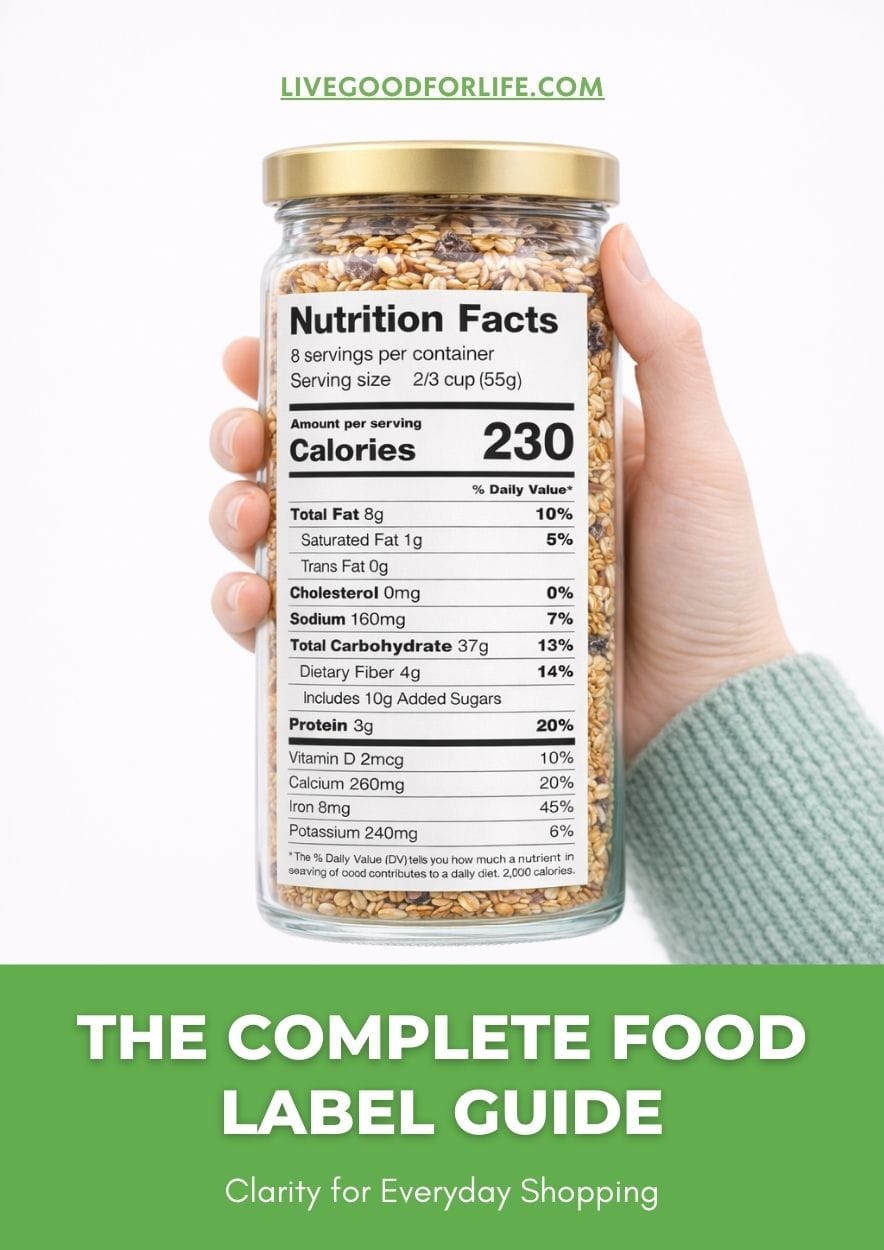
2. Check the Nutrition Facts panel
After serving size, the next step is to look at the main nutrition details. This gives you a clearer idea of what the food is providing per serving.
Useful areas to check include:
calories
total fat
saturated fat
sodium
total carbohydrate
dietary fiber
total sugars
added sugars
protein
You do not need to panic over every number. The goal is not perfection. The goal is awareness.
3. Read the ingredient list
The ingredient list is where the product becomes more honest.
Ingredients are listed from highest to lowest by weight. That means the first few ingredients usually make up most of the food. If sugar, refined oils, fillers, or heavily processed ingredients appear near the top, that tells you a lot very quickly.
Many shoppers overlook this step, but it is often one of the most useful.
4. Compare similar products
Food labels work best when you compare similar items side by side.
Instead of asking whether one product is “good” or “bad,” it is often more helpful to ask:
Which option has less added sugar?
Which one has more fiber?
Which one has a simpler ingredient list?
Which one has more protein?
Which one relies less on additives?
This makes label reading feel more practical and less emotional.
Common Problems Hidden in Plain Sight
When people start reading labels more closely, a few common issues come up again and again.
Added sugar
A product may not seem very sweet, but added sugar can still show up in large amounts. This matters because added sugar can build up quickly across cereals, sauces, yogurts, snack bars, drinks, and packaged foods.
Very small serving sizes
Some labels make a product look lighter or lower in calories simply because the serving size is smaller than what most people would realistically eat.
Low-fat but high-sugar
A product may sound healthier because it is low fat, but sometimes the missing fat is replaced with extra sugar, starch, or additives to improve taste and texture.
Long ingredient lists built around fillers
A long list is not always a problem by itself, but when the first ingredients are refined starches, syrups, oils, and additives, it usually tells a different story than the packaging headline.
Health claims that do not match the overall product
Words like natural, plant-based, gluten-free, or cholesterol-free can sound impressive, but they do not automatically mean the product is nutrient-dense or less processed.
A Simpler Way to Compare Foods
When comparing similar packaged foods, it helps to keep your eye on a few practical points.
| What to compare | What to look for |
|---|---|
| Added sugar | Lower is usually better |
| Fiber | Higher often supports fullness and balance |
| Protein | Helpful for satiety and structure |
| Sodium | Lower can be useful, especially in processed foods |
| First ingredients | Whole-food ingredients near the top are usually a better sign |
| Additives and refined oils | Fewer can suggest a simpler product |
This kind of comparison is often more useful than reacting to one marketing phrase on the front.
Why Ingredient Order Matters
A lot of people assume the ingredient list is too technical to be helpful, but the order actually makes it easier.
The first three to five ingredients often tell you most of what you need to know.
For example, when the list begins with things like whole oats, nuts, seeds, or other recognizable food ingredients, that usually creates a different picture than a list beginning with sugar, corn syrup, refined flour, or oils.
You do not need to know every ingredient in detail to make a better decision. You just need to notice the overall pattern.
That is often enough to help you compare one product with another more clearly.
What to Focus on Instead of Perfection
A lot of people get stuck because they try to find the “perfect” product.
In real life, shopping usually works better when you focus on improvement instead of perfection. A practical label-reading mindset might look like this:
choose the option with less added sugar when comparing similar products
look for more fiber and protein where it makes sense
pay attention to serving size before judging the numbers
scan the first few ingredients before trusting the claims
use labels as comparison tools, not as a reason to overcomplicate every choice
This approach makes shopping more realistic and far less stressful.
Common Food Label Myths That Cause Confusion
There are several ideas that make shopping harder than it needs to be.
“Natural” always means healthy
Not necessarily. A product can still be high in sugar, sodium, or saturated fat even if it uses natural-style language on the packaging.
“No added sugar” means sugar-free
Not always. A product may still contain naturally occurring sugars, so it is still worth checking total sugars and the overall ingredient list.
“Low fat” means it is automatically a better choice
Sometimes fat is reduced, but sugar, starch, or additives are increased to make the product more appealing.
“Plant-based” means light or healthy
Not always. Some plant-based products are still highly processed or high in sodium and additives.
“Gluten-free” means healthier for everyone
That only applies if gluten avoidance is needed for a specific reason. A gluten-free product can still be low in fiber or high in sugar.
This is why labels need context. One claim alone rarely tells the full story.
A Better Grocery Shopping Mindset
The real solution is not becoming obsessed with labels. It is becoming more confident with them.
A better mindset is to use labels as simple tools that support your choices. They are there to help you see beyond the front of the package and understand what a product is actually offering.
That means:
looking past the buzzwords
checking serving size first
using ingredient order as a clue
comparing similar foods calmly
noticing patterns instead of chasing perfection
The more often you do this, the easier it becomes.
Final Thoughts
Food labels can feel overwhelming at first, but they become much more manageable when you stop trying to read everything at once and start focusing on the parts that matter most.
The biggest problems shoppers face are usually not a lack of effort. It is the fact that packaging often creates confusion, exaggerates one positive feature, or hides the bigger picture behind attractive wording.
The solution is clarity.
When you know how to check serving size, scan the Nutrition Facts panel, read the first few ingredients, and compare similar products side by side, you are in a much stronger position to make choices that truly fit your goals.
You do not need to shop perfectly. You just need a clearer system.
And once you have that, food labels stop feeling like a wall of confusion and start becoming one of the most useful tools in your everyday routine.
Disclaimer
This content is for informational and educational purposes only and is not intended as medical advice, diagnosis, or treatment. Always speak with a qualified healthcare professional before making significant dietary changes or decisions related to a medical condition.

Use Our Savings Calculator
See how much you could save by switching to LiveGood member pricing.
Open CalculatorUnlock Your Personalized Health Assessment
Get a quick, free health report with simple insights and practical next steps for your goals.
Explore Helpful Wellness Guides
Discover practical wellness tips, supplement education, and simple step-by-step articles that make products, ingredients, and everyday health topics easier to understand.
Real Insights on LiveGood Products and Opportunity.
Disclaimer: The content on this website is for informational and educational purposes only and is not intended as medical advice, diagnosis, or treatment. Always consult a qualified healthcare professional before using supplements or making health-related decisions. Some links on this site may be affiliate links, which means I may earn a commission at no extra cost to you.
©danielpopa.com